top of page

Brainspotting

What is Brainspotting?

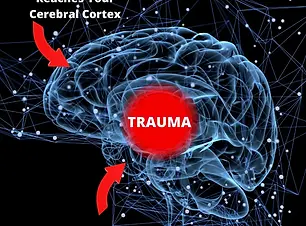
A Brainspotting therapist helps a client identify a physical sensation, emotion, memory, or issue they want to work on. The therapist then helps the client find a particular eye position that seems connected to that experience. While maintaining focus on that spot, the client notices thoughts, emotions, body sensations, and memories that arise, allowing the brain and body to process unresolved material.

brainspotting image.jpg

​How Brainspotting Differs from Traditional Talk Therapy

Traditional talk therapy primarily uses the thinking, language-based parts of the brain. Brainspotting works more directly with:

  • The nervous system

  • The Emotional brain

  • Body sensations

  • Implicit (nonverbal) memories

brainspotting+san+francisco+bay+area.webp

When is Brainspotting used

Brainspotting is often used for:

  • Trauma and PTSD

  • Anxiety

  • Grief and loss

  • Relationship wounds

  • Performance anxiety (sports, public speaking, music)

  • Attachment injuries

  • Emotional blocks

  • Stress and overwhelm

how-does-brainspotting-work-wordpress-1-1024x536_edited.png

What a Session Feels Like

A Brainspotting session may involve:

  • Less talking than traditional therapy

  • Periods of silence and focused attention

  • Awareness of body sensations

  • Emotional processing

  • New insights emerging naturally

18830 Stone Oak Parkway

(located inside the Birdy Realtor Building)

San Antonio, TX 78258

Phone: 210-209-8189

Sec. 181.104. CONSUMER COMPLAINT REPORT BY ATTORNEY GENERAL. (a) The attorney general annually shall submit to the legislature a report describing:(1) the number and types of complaints received by the attorney general and by the state agencies receiving consumer complaints under Section 181.103; and(2) the enforcement action taken in response to each complaint reported under Subdivision (1).(b) Each state agency that receives consumer complaints under Section 181.103 shall submit to the attorney general, in the form required by the attorney general, the information the attorney general requires to compile the report required by Subsection (a).(c) The attorney general shall de-identify protected health information from the individual to whom the information pertains before including the information in the report required by Subsection (a).Added by Acts 2011, 82nd Leg., R.S., Ch. 1126 (H.B. 300), Sec. 6, eff. September 1, 2012.

Notice to Client:

The Behavioral Executive Council investigates and prosecutes professional misconduct committed by marriage and family therapist, professional counselors, psychologist, psychological associates, social workers, and licensed specialists in school psychology.  Although not every complaint against or dispute with a licensed involves professional misconduct, the Executive Council will provide you with information about how to file a complaint. 

Please call 1-800-821-3205 for info or click here for mor info https://bhec.texas.gov/complaints-enforcement-faqs/

Consumer Protection with the Attorney Generals Office information can be found here https://www.texasattorneygeneral.gov/consumer-protection

Notice of General Health Records

The laws and standards of counseling in Texas require the therapist to keep treatment records. These records are confidential and will not be released to anyone without the client’s consent.  Please be aware that the client may choose not to release these if they can be emotionally or legally damaging.  The therapist will make these records available to another mental or medical health professional at the clients request.

©2019 by Karen Benitez Counseling. Proudly created with Wix.com

bottom of page